


Best Virtual Dollar Card in Nigeria: Fees, Limits, No BVN
Everyone here who has tried to pay for Netflix, a Meta ad or a ChatGPT plan knows the feeling: the checkout spins, then "card declined". For almost three years, from 2022 to mid-2025, local cards simply did not work abroad. The banks have switched international payments back on, and in 2026 the limits are finally rising, but the experience is still uneven: one bank allows $40,000 a quarter, another $500 a month, and plenty of foreign merchants still refuse a local card on sight. Add the fintech cards that vanished overnight in 2022, and the funding-rate games some apps play, and it is no surprise that "which virtual dollar card actually works in Nigeria?" is still one of the most asked questions on Nairaland.
This guide answers it properly. We compare the providers people actually search for, explain what each one really costs once the naira-to-dollar spread is counted, say which cards work for which services, and show where a crypto-funded card from Vizovcc fits: no BVN, no local funding rate, a dollar balance from $95 to $285 per card, and card details in your dashboard in minutes.
Key takeaways
- Local cards are back but capped and patchy: limits range from about $500 a month to $40,000 a quarter depending on the bank, and many dollar merchants still decline them.
- local fintech dollar cards are cheap to create ($1.5–$10) but need BVN or NIN, fund at a marked-up local rate, and several have been suspended before.
- A crypto-funded card from Vizovcc is loaded with USDT at face value, needs only an e-mail, and holds a larger dollar balance per card. It is not free, it is not a naira card, and it cannot receive money.
What Is a Virtual Dollar Card and How Do Virtual Dollar Cards Work?
A virtual dollar card is a digital payment card: cards are digital, so instead of plastic the card comes as a 16-digit card number, an expiry date and a CVV, denominated in US dollars. Unlike a physical card or a bank debit card, there is nothing to post or lose, yet virtual cards work like a regular card: you paste your virtual card details into any international checkout for online shopping, online purchases and other online transactions, save them in a subscription, or add the card to Apple Pay or Google Pay. The card is linked to a dollar balance, the card balance is the spending limit, and because the balance is already in dollars the merchant sees a normal prepaid virtual Visa or Mastercard on its card network, not a naira card going through a currency conversion and a bank's international-spend rules. USD virtual cards like this allow you to make international payments and pay for international services without an international bank account; local cards get declined on exactly those international online payments, and such cards often fail without explanation.
That matters because the naira card recovery is real but partial. Banks re-enabled international transactions on local cards from July 2025 and, with foreign reserves above $54 billion in September 2026, have raised limits: GTBank moved its quarterly cap from $6,000 in May 2026 to $20,000 in August and $40,000 in September; Zenith allows $50,000 a year; FirstBank $10,000 a quarter; Stanbic $8,000 a quarter; Wema around $500 a month. But limits differ by bank and account tier, the conversion happens at the bank's rate, and the services Nigerians most want to pay for, ad platforms, AI tools and US subscriptions, bill in dollars with recurring charges that many local cards still reject. The right virtual dollar card removes all three problems at once.
Which Virtual Dollar Cards in Nigeria Actually Work? It Depends on What You Pay For
The "virtual dollar card in Nigeria" Nairaland question is really several questions, because each merchant behaves differently. Here is what a working virtual dollar card in Nigeria can and cannot do.
| What you want to pay for | Does a USD virtual card work? | What to know |
|---|---|---|
| Meta (Facebook, Instagram), Google and TikTok ads | Yes | Meta routes every ad payment through an international gateway even when billing is set to local currency, and only Visa or Mastercard are accepted (no Verve, no OPay). Open the ad account in USD, since the billing currency cannot be changed later, and start with small daily budgets while the account is new. |
| Netflix, Spotify, Apple, YouTube Premium | Yes | Pay on the dollar or international version of the plan. A locally priced plan expects a local card and may reject a foreign one. |
| ChatGPT, Claude, Canva, Adobe, AWS, Zoom | Yes | Dollar billing with recurring charges. This is the category where local cards fail most, and where a dollar card earns its fee. |
| Amazon, eBay, AliExpress, Temu, Shein | Yes | Match the billing address to the address in your card dashboard; the delivery address can be local. |
| PayPal | Partly | PayPal accounts opened here are send-only. A dollar card can be linked for payments, but PayPal's own country rules still apply, and no card turns a send-only account into a receiving one. |
| Binance and other exchanges | Varies | Card purchases of crypto are restricted on many platforms for accounts opened here; funding our card is done with crypto, not the other way round. |
| Local sites: Jumia, DSTV, airtime, local transfers | No | Use a local card or bank transfer. A dollar card would only add a conversion. |
| Receiving payments from clients abroad | No | A card spends; it does not receive. Freelancers and remote workers who need to be paid in dollars want a Grey, Geegpay or domiciliary USD account for that side, and a card for international spending on this side. |
Best Virtual Dollar Card in Nigeria: Top 10 Providers and Apps Compared
Below is the list of virtual dollar card providers in Nigeria that come up in every "top 10 virtual dollar card in Nigeria" and Nairaland thread, with the fees their own pages and the 2026 comparison sites publish. Each card offers a different mix of card creation fee, card funding method and limits. Fees change often, so treat the table as a starting point and check the app before funding.
| Provider | Card creation | Monthly fee | Funding | KYC | Notes |
|---|---|---|---|---|---|
| Vizovcc | $5–$15 issue charge, balance loaded at face value | No monthly maintenance, no transaction fees | Crypto (USDT, USDC, BTC, ETH, LTC) | E-mail only | dollar balance $95–$285 per card; reloadable; freeze from dashboard; no local-currency funding |
| Cardtonic | $1.50 (Platinum $5) | None | Local transfer, USDT/USDC, gift cards; ~2% funding fee | BVN + ID | Cross-border fee about 2.2–2.5% + $0.50 on non-USD charges |
| Geegpay (Raenest) | $3 | None | Local or USD wallet; ~2% NGN to USD; $2 minimum | BVN/NIN | Popular with freelancers; can also receive USD |
| Grey | $4 ($1 credited back) | None | Local currency converted in app, 1% capped around $6 | NIN, 24–48 h review | Up to about $2,000–2,500 per transaction; receives USD, GBP, EUR |
| Chipper Cash | $3–$5 | $1 | Transfer from any bank | BVN + ID | Simple, but FX rate runs higher than specialists |
| Kuda | Free for Kuda customers | None | Kuda balance | Kuda account (BVN) | $500 a month, $200 per transaction |
| Vesti | $10 | None | Local transfer; $10 minimum | BVN/NIN | $10,000 monthly cap |
| Zole | $2 | None | Local or CAD; 0.5% per transaction | BVN/NIN | Mastercard only |
| Bitnob | $1 | $1 if you top up under $100 | Local or crypto; 1% above $100 | BVN/NIN | Up to $10,000 funding |
| Gomoney / ALAT by Wema | First card free (Gomoney ₦850 after) | None | Local transfer | BVN; Wema account | Gomoney capped at $100 a month; free for Wema customers |
If you are looking for the best app to get a virtual dollar card in Nigeria, read it this way. If you earn in dollars and need to receive money, Grey or Geegpay give you a USD account and a card in one app. If you want the cheapest possible card for small locally funded purchases and you are happy to complete BVN verification in a banking app, Cardtonic, Zole or Bitnob are hard to beat. If you already hold crypto, do not want to hand over a BVN, or want a larger dollar balance on one card for ads and tools, our card is the one option in the table with no funding spread and no identity paperwork.
Cheapest Virtual Dollar Card in Nigeria: Why the Creation Fee Is the Wrong Number
Most "cheapest" lists compare the $1.50 or $3 creation fee. That is the smallest cost you will pay. The real cost of a locally funded dollar card sits in four places:
- The FX spread. The app quotes its own naira-per-dollar rate, including USD you never see at the official price. On 19 October 2026 the official rate was about ₦1,333 per dollar and the parallel market around ₦1,375–1,390. If an app quotes ₦1,450, that 4–5% gap is a hidden fee on every top-up, before any stated "1–2% funding fee".
- Per-transaction and cross-border fees. 0.5% per purchase at some providers, 2.2–2.5% plus $0.50 on non-USD charges at others.
- Decline and maintenance fees. $0.35 to $1 for a failed charge at some apps, $1 a month at others, minimum balances at most.
- Limits that force you onto a second card. $100 or $500 a month is fine for Spotify and useless for an ad account.
Worked example: loading $100 of ad budget through an app that charges $3 creation, 2% funding and quotes a rate 4% above the market costs you about $109 in ₦ terms. Loading $95 onto a Mastercard Reloadable Classic costs $100 flat: a $5 issue charge, and the USDT you send is credited at face value with no rate games. For anyone who already buys USDT, that is usually the cheaper route; for someone funding ₦5,000 a month from a salary account, a local app is cheaper. Be honest with yourself about which one you are.
Is There a Free Virtual Dollar Card in Nigeria?
Not one with useful limits. Gomoney issues the first card free but caps international spending at $100 a month; Wema Bank gives its own customers a free one through its ALAT digital banking app; Kuda's is free for Kuda account holders with a $500 monthly limit; Fundall and Eversend waive the creation fee but charge monthly or decline fees. Every other provider, including us, charges to create the card. "Free virtual dollar card" offers on Telegram and TikTok that ask you to pay a "activation" or "unlock" fee first are scams. Our pricing is simple: the issue charge is the only fee, and it is shown before you buy.
Banks That Offer Virtual Dollar Card Services in Nigeria (and What Changed in 2026)
If you prefer a bank, you have two routes. The first is a proper dollar card tied to a domiciliary account: GTBank's dollar Mastercard, Zenith's dollar prepaid card, UBA's Africard prepaid and Wema's virtual card. These work well for travel and larger payments, but opening a domiciliary account means a branch visit, references and minimum balances, and funding often means walking dollars into the branch. The second route is the naira card you already have: since July 2025 GTBank, UBA, Access, First Bank, Zenith and Wema have re-enabled international use in the banking app, and limits in 2026 range from roughly $500 a month at Wema to $40,000 a quarter at GTBank. The catch is the merchant side: the bank converts at its own rate, and many dollar services still decline locally issued cards for recurring billing. A dollar virtual card is the tool that fills that gap, whichever bank you use.
Our Dollar Virtual Cards and Prices
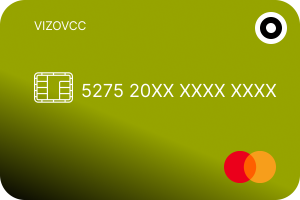
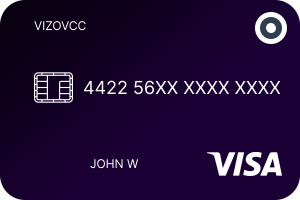
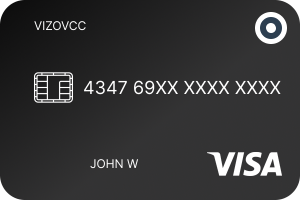
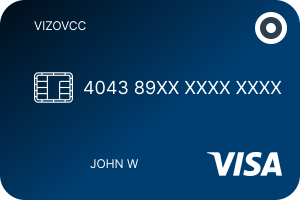
Every dollar virtual card in Nigeria from Vizovcc is a reloadable US-dollar card bought from your account balance, which you fund with cryptocurrency. Card funding is simple: fund your virtual card directly from that balance. There is no monthly fee and no funding spread: you pay the issue charge, and the rest of the price is loaded onto the card as spendable balance.
| Card | Total price | Issue charge | Loaded balance | Validity | |
|---|---|---|---|---|---|
| Mastercard Reloadable Classic | $100 | $5 | $95 | 1 year | Get this card → |
| Visa Virtual Universal | $100 | $5 | $95 | See card page | Get this card → |
| Virtual Visa Gold | $200 | $10 | $190 | 2 years | Get this card → |
| Virtual Visa Platinum | $300 | $15 | $285 | 3 years | Get this card → |
All cards are denominated in US dollars, so dollar-billed services carry no conversion at all. You can create virtual cards for each purpose (one per ad account or client is a common setup), reload any of them from your balance, unload unused funds back, and freeze a card from the dashboard the moment something looks wrong. See the full range on the cards page.
Ready for a dollar card that is not tied to a local issuer?
Create your free account, send USDT, and get your virtual card details in your dashboard in minutes. No BVN, no NIN, no local rate.
How to Get a Virtual Dollar Card in Nigeria in Four Steps
- Create an account with your e-mail address. No BVN, no NIN, no ID upload. This is also where you will create a virtual dollar card later.
- Buy USDT and send it to your balance. Buy from an SEC-licensed exchange such as Busha or Quidax (Yellow Card and Bitnob have applied), or use USDT you already hold. USDT on Tron (TRC-20) is the cheapest to send; USDC, Bitcoin, Ethereum and Litecoin are also accepted. Your balance appears once the transfer confirms, with no local rate applied by us.
- Create the card. Pick a card that supports what you need, pay the issue charge from your balance, and you get the card instantly: the card number, expiry and CVV appear in your dashboard. For Meta or Google ads, load at least your first month's budget plus 10% headroom for holds.
- Use the card. Add it to the merchant with the billing address shown in your dashboard, complete 3-D Secure when asked, or add it to Apple Pay or Google Pay for in-app payments. Reload from your balance whenever you need to.
A note on crypto in Nigeria
Buying and holding crypto is legal; the Investments and Securities Act 2025 treats digital assets as securities and the SEC licenses exchanges. Use a licensed exchange rather than an informal P2P seller: the CBN has frozen the bank accounts of P2P traders before, and from 2026 crypto gains fall under personal income tax. Keep records of what you buy and spend.
Why a Crypto-Funded Card Is Insulated From the Next Card Freeze
Users in Nigeria have been burned twice. In 2022, Barter by Flutterwave, Chipper Cash and several other apps suspended their dollar cards within days of each other after their shared issuer, Union54, cut them off. Between 2022 and 2025 the banks themselves switched off international payments on local cards because they could not source dollars. Both failures had the same root: the card depended on a local issuer or on local FX liquidity. Our card is issued outside Nigeria, funded in a dollar stablecoin, and never touches the local FX market, so a CBN circular about dollar scarcity does not reach it. That is the structural reason crypto-funded cards kept working through 2023 and 2024 when everything else froze. It is not a promise that no merchant will ever decline a card, but it removes the single biggest cause of local card failure.
Security: Keeping Your Money and Your Data Safe
- No BVN or account exposed. There is no local identity record behind the card, so a breach at a merchant cannot be traced back to your bank profile.
- Capped exposure. The card holds only what you load; a compromised card can lose at most its balance, never your savings.
- Freeze and replace. Freeze the card from the dashboard instantly, or stop reloading it and issue a fresh one for your next sign-up.
- 3-D Secure on participating merchants adds a confirmation step to online payments.
- One card per purpose. Keep ad accounts, subscriptions and one-off shopping on separate cards so one problem never stops everything.
Who Should Use Our Card
- Advertisers and agencies running Meta, Google or TikTok campaigns who need a dollar-billed card per ad account.
- Freelancers and remote workers paying for AI tools, SaaS, Upwork fees and courses in dollars.
- Crypto holders who already keep savings in USDT and want to spend it without a round trip through the banks.
- Online shoppers buying from Amazon, AliExpress or Temu who are tired of local-card declines.
- Anyone who does not want to submit a BVN to another fintech app.
Honest Pros and Cons, and What the Card Will Not Do
| Pros | Cons |
|---|---|
| No BVN, NIN or bank account; e-mail sign-up | Not free: issue charge from $5 |
| Balance loaded at face value, no funding-rate spread | Crypto funding only: you need USDT or another coin first |
| Larger dollar balance per card ($95–$285), reloadable | Spending card only: it cannot receive client payments |
| Issued abroad, so bank FX freezes do not reach it | No local-currency card, no local bills, no ATM withdrawals |
| Freeze any time; one card per project | Not licensed by the CBN; we are not a local bank or wallet |
Vizovcc is an independent card provider. We are not a local bank, we are not licensed by the CBN, and we do not offer local-currency accounts, remittances or receiving accounts. For earning in dollars you still need a domiciliary or fintech USD account; for spending in dollars without the paperwork, this is the card.
Get your dollar virtual card today
Free account, instant card, reload whenever you need. Join users who pay for ads, tools and subscriptions without a single declined local card.
Frequently Asked Questions
How can I get a virtual dollar card in Nigeria?
Two routes. Through a local fintech app (Cardtonic, Geegpay, Grey, Chipper, Kuda and others) you verify your BVN or NIN, fund in local currency at the app's rate and pay $1.50–$10 to create the card. Through us you register with an e-mail, send USDT or another coin to your balance, and issue a card for a $5–$15 charge with the rest loaded as dollars. Both take under ten minutes.
Which virtual dollar card works in Nigeria right now?
Any properly issued dollar card on either network works for dollar-billed merchants: ad platforms, AI tools, international subscriptions and global stores. The differences are limits, fees and reliability. Problems come from locally priced plans, merchants that block accounts opened here at sign-up, and PayPal's country rules, which no card fixes.
What is the best virtual dollar card in Nigeria for me?
For receiving and spending dollars as a freelancer, Grey or Geegpay. For the lowest creation fee with local funding, Cardtonic or Zole. For a card with no BVN, no funding spread and a larger balance, funded from crypto, a card like ours. The best card is the one whose limits and funding method match how you earn.
What is the cheapest virtual dollar card in Nigeria?
By creation fee, Bitnob ($1) and Cardtonic ($1.50). By total cost, it depends on the app's exchange rate: a rate 4–5% above the parallel market costs more than any creation fee. If you already hold USDT, our cards have no funding spread at all, so the $5 issue charge is the whole cost.
How can I get a free virtual dollar card in Nigeria?
Only with low limits: Gomoney's first card is free but capped at $100 a month, Wema's is free for its own customers, Kuda's is free for Kuda customers with a $500 monthly limit. Anyone asking you to pay an "activation fee" to unlock a free card is running a scam.
Which banks offer a virtual dollar card in Nigeria?
Wema offers one in its app; GTBank, Zenith and UBA offer dollar cards tied to domiciliary or prepaid dollar accounts; Kuda offers one with a $500 monthly limit. Most other banks rely on their local cards, which have had international use re-enabled with limits that vary by bank.
How do I create a virtual dollar card in Nigeria with an app?
Every dollar virtual card app in Nigeria follows the same three moves: create an account, fund it, tap "create card". The difference is the paperwork. Cardtonic, Geegpay, Grey, Bitnob and the bank apps ask for a BVN or NIN before the card appears; with us you sign up with an e-mail, send USDT and choose a card, and the card number, expiry and CVV appear in the dashboard without any identity step.
Where can I get a virtual dollar card in Nigeria without a BVN?
From a crypto-funded provider like us. Local apps and banks are required to collect a BVN or NIN; a card issued abroad and bought from a crypto balance is not. Check the price table above and the four-step guide.
Do I need a BVN?
With a Nigerian bank or local fintech, yes: BVN or NIN verification is mandatory. With us, no. You register with an e-mail and fund with crypto, so there is no BVN, NIN or address check on our side.
Can I fund the card with naira?
Not directly. Funding is in cryptocurrency. Most users buy USDT on a licensed exchange with naira and send it to their balance; USDT on Tron is the cheapest network to use.
Will it work for Facebook and Instagram ads?
Yes. You can use a virtual dollar card for Meta ads: open the ad account with USD billing, add the card with the billing address from your dashboard, and start with a small daily budget so Meta's new-account checks do not flag a sudden large charge.
Will it work for Netflix?
Yes on a dollar-billed plan. Netflix Nigeria's local pricing expects a local card; if your plan is billed in local currency, switch to a plan billed in dollars or use the card on the international site.
Can I use it with PayPal?
You can add it as a payment card, and because it is a US-dollar card it links more smoothly than a local card. PayPal's rules for accounts opened here (send-only) still apply, and PayPal may ask for confirmation charges.
How much does your dollar card cost?
The Mastercard Reloadable Classic and Visa Virtual Universal cost $100 each ($5 issue charge, $95 loaded); the Gold card $200 ($10 + $190); the Platinum card $300 ($15 + $285). No monthly fee, no funding spread.
Can I freeze or reload the card?
Yes. Freeze and unfreeze from your dashboard any time, reload from your balance whenever you need, and unload unused funds back to the balance.
Will the best virtual dollar card in Nigeria change in 2027?
In detail, yes; in kind, no. Bank limits, app fees and the naira rate move every quarter, so the cheapest or best option shifts, and we revise this page as they do. The structural picture is stable: local apps are cheap to create but need a BVN and a marked-up rate, bank dollar cards need a domiciliary account, and a crypto-funded card trades a small issue charge for no paperwork and no rate games.
Is Vizovcc a Nigerian company or regulated by the CBN?
No. We are an independent, crypto-funded card provider operating abroad. It is not licensed by the CBN, does not hold naira, and does not offer accounts for receiving money. That is also why local FX restrictions do not affect it.
The Bottom Line
In 2026 someone here has more dollar card options than at any time since 2022: local cards function abroad again with rising limits, fintech apps issue cards for a few dollars, and crypto-funded cards sit outside the local banking system entirely. Pick by how you earn and what you pay for. If you are paid in dollars, get a Grey or Geegpay account. If you fund small amounts from a salary, a cheap BVN-verified app is fine. If you hold USDT, run ads or tools, or simply do not want to give another app your BVN, create a free account, send USDT and get virtual card details in your dashboard in minutes.
Sources:
- Nairametrics, GTCO, FirstBank, others raise dollar spending limits (7 Sep 2026), bank limits and reserves
- Techloy, banks resume international transactions on local cards (July 2025)
- Grey, how to pay for Facebook Ads (updated Oct 2026), Meta billing rules
- NaijaTechGuide provider list (Jul 2026); Cardtonic, Top 21 providers (2026); nairaCompare, Best virtual USD cards (Feb 2026), provider fees
- Aboki Forex dollar card guide, spread vs stated fee
- TechEconomy, exchange rates 19 Oct 2026, official and parallel rates
- TechCabal, SEC crypto licensing; Chambers, Blockchain & Crypto-Assets 2026: Nigeria, legal status of digital assets