



Virtual Card USA: Get a US-Issued Visa or Mastercard Online, No SSN Needed
You found the perfect US tool, subscription or ad platform. You type in your card number, press Pay, and get the same message again: "Your card was declined." Your bank says the card is fine and your balance is there. The problem is simpler: many US websites trust US-issued cards and are wary of everything else.
A USA virtual card fixes that. It's a real Visa or Mastercard issued by a US bank, billed in US dollars, and you can have one online without living in America, without an SSN and without a US bank account.
Quick Answer: A virtual card USA is a digital Visa or Mastercard with a US card number (BIN), used to pay online and in Apple Pay or Google Pay without a plastic card. US banks and apps such as Capital One, Privacy.com, Revolut and Wise give virtual cards to US residents with an SSN or a US bank account. Vizovcc sells prepaid US virtual cards to people anywhere: no SSN, no US bank account, no credit check and no monthly fee, funded with Bitcoin, USDT or other crypto.
Key takeaways
✅ Most "virtual credit cards" in the USA are really debit or prepaid cards linked to a US account.
✅ Almost every US bank and app requires US residency and an SSN or ITIN by law.
✅ A prepaid US card from a non-bank seller works from day one, wherever you live.
✅ Our cards are US-issued, billed in USD and work with Apple Pay and Google Pay.
✅ No monthly fee: you pay the card price once, and most of it is your spendable balance.
Virtual Card USA: Our US Cards and Prices
Every card below is issued by a US bank, runs on the Visa or Mastercard network, supports 3D Secure and works online and in your phone wallet. The price includes a one-off issue charge; the rest is loaded onto the card as balance you can spend.
| US card | Network & BIN | Price | Best for |
|---|---|---|---|
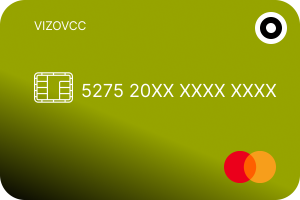
| Mastercard Reloadable Classic | Mastercard · 527520 | $100 | Your first US card, everyday subscriptions |
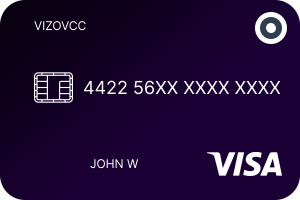
| Visa Virtual Universal | Visa · 442256 | $100 | A low-cost Visa for streaming and apps |
| Virtual Visa Reloadable | Visa · 428801 | $200 | Recurring bills you top up every month |
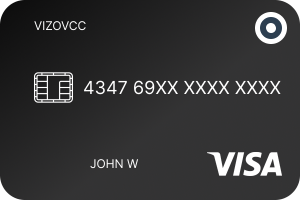
| Virtual Visa Gold | Visa · 434769 | $200 | AI tools, SaaS and US online shops |
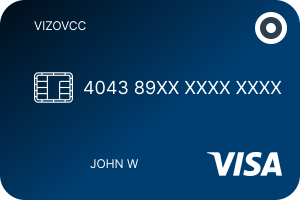
| Virtual Visa Platinum | Visa · 404389 | $300 | Ad accounts and bigger monthly spend |
Card details at a glance
| Card | Issue charge | Balance loaded | Validity | Reloadable |
|---|---|---|---|---|
| Mastercard Reloadable Classic | $5 | $95 | 1 year | Yes |
| Virtual Visa Gold | $10 | $190 | 2 years | Yes |
| Virtual Visa Platinum | $15 | $285 | 3 years | Yes |
Notice: We accept cryptocurrency and card payment (card payment goes through our WhatsApp agent). See the full card store for live stock.
Which US Virtual Card Should You Pick?
Each virtual card option suits a different job. Start from what you want to pay for:
| I want to… | Pick |
|---|---|
| Try a US card for the first time with a small budget | Mastercard Reloadable Classic or Visa Virtual Universal |
| Pay ChatGPT, Claude, Adobe, Canva or other US software | Virtual Visa Gold |
| Keep Netflix, Spotify and other subscriptions on one card | Virtual Visa Reloadable |
| Run Google, Meta or TikTok ads | Virtual Visa Platinum, one card per ad account |
| Shop on US stores that prefer Mastercard | Mastercard Reloadable Classic |
Credit Card, Debit Card or Prepaid: What a US Virtual Card Really Is
People search for a "virtual credit card USA", a "virtual debit card USA" and a "virtual prepaid card USA" as if they were the same thing. They aren't:
👉 Virtual credit card: a card number linked to a credit line. Banks such as Capital One create one from a credit card you already hold, so you need a US credit history first.
👉 Virtual debit card: a card number linked to a checking account. You need the account, which means US residency and an SSN or ITIN at almost every bank.
👉 Virtual prepaid card: you load money first and spend only what's there. No credit check, no debt and no US account behind it.
Our US cards are prepaid. To a website they look like any US Visa or Mastercard: 16-digit number, expiry date, CVV and a US BIN. To you, they're simpler: no interest, no credit score and no bill at the end of the month.
How Virtual Cards Work and the Benefits of Virtual Cards
A virtual card is a payment card that exists only as data: a 16-digit card number, an expiration date and a CVV. Card companies such as Visa and Mastercard run the network, while the card issuer (a bank) and a card provider run the card program that lets them issue virtual cards. Your card information sits in your account or mobile app, so you can use virtual cards for online purchases and online payments as soon as they're ready, with no plastic to wait for.
Virtual card vs physical card
With physical credit cards, the physical card number printed on the plastic is the number every shop stores. A virtual card number is different: if a website leaks it, your actual card and bank account stay safe. Some banks link virtual credit card numbers to your actual credit card, such as the virtual numbers on Capital One credit cards. Others create unique card numbers for each shop. Ours are prepaid: there is no physical credit line behind them, and the card account is simply the balance you load.
Benefits of virtual cards
👉 Secure online payments: stolen credit card numbers or a leaked debit card number from a hacked shop can't reach your bank.
👉 Ready in minutes: shop online the same day instead of waiting a week for a card in the post.
👉 Multiple cards, one per job: keep one card for ads and another for subscriptions, so one problem never stops everything.
👉 Control: freeze a card, move money on or off it, and keep track of your card transactions.
Limits on virtual cards
Most virtual cards offer online use first. Some don't work for ATM cash, and hotels or car rentals may still ask for a physical card. On a prepaid card, your limit is your balance, so you can't overspend or end up in debt.
Why Non-US Cards Get Declined on US Websites
Your card can be valid, funded and still fail. These are the usual reasons:
👉 The BIN country. The first six digits of a card show which country issued it. Many US merchants and their fraud tools score foreign BINs as higher risk, especially on first payments and free trials.
👉 Address checks (AVS). US merchants compare the billing address and ZIP code you type with the address the card issuer has on file. If they don't match, the payment fails. A made-up US address doesn't help, because it still won't match the card.
👉 Currency and limits. A card in rupees, naira, pesos or lira has to convert to dollars. Some banks block or cap foreign payments, and others add a 2–3% foreign transaction fee.
👉 Extra security steps. 3D Secure sends a code or a push to confirm the payment, including virtual card transactions. If your bank's 3D Secure doesn't work with the merchant, the payment stops.
A US-issued card in USD removes the first and third problems. Saving the right billing address on the card (you can do this on our card page) takes care of the second.
USA Virtual Card Providers for Residents and Non-Residents
Here's who offers virtual cards in the USA, and who can actually get them:
| Option | Who can get it | Card type | Cost |
|---|---|---|---|
| Vizovcc | People in most countries; email sign-up, no SSN | Prepaid US Visa or Mastercard | One-off card price, no monthly fee |
| Privacy.com | US citizens or legal residents, 18+, with a US checking account, a US phone and an SSN | Virtual cards linked to your bank account | Free plan and paid plans |
| Capital One | Holders of an eligible Capital One credit card | Virtual numbers for your existing credit card | No extra fee |
| Revolut (US) | US residents with an SSN, or people living in the US on a valid visa | Debit cards on a Revolut account | Free and paid plans |
| Wise (US) | US personal account holders; the virtual card comes after you order the physical card | Multi-currency debit card | Free virtual cards; physical card fee |
| Crypto.com | Approved users after ID and address checks | Prepaid Visa, virtual card for online use | Depends on card tier |
| US Unlocked | People living outside the US, after ID checks | Prepaid US virtual cards | $4.95 a month or $39.95 a year, plus load fees |
| Affirm / Klarna one-time cards | US shoppers approved for a buy now, pay later plan | Single-use card for one purchase | Repay in instalments; terms vary |
Provider details as published by each provider. Always check their current terms.
Our honest take: if you live in the US and have an SSN, a free virtual card from your bank or from Privacy.com is the easiest choice. If you don't, compare the total cost: US Unlocked virtual cards charge a monthly fee plus load fees, while our cards have one card price and no monthly fee. If you live outside the US, have no SSN or US bank account, or want a separate card funded with crypto, that's exactly what our cards are for.
Is There a Free Virtual Credit Card in the USA?
Yes, but only for some people. Privacy.com has a free plan, Capital One virtual numbers cost nothing extra, and Wise virtual cards are free once you have a Wise card. All three need US residency and a US bank account, an SSN or an existing US credit card.
If you don't have those, be careful with websites promising a "free virtual credit card with instant approval" and "no verification". Real cards cost money to issue, and many of these offers end in fees you didn't expect, or in a card that never arrives.
Our cards aren't free, but there's no monthly fee, no load fee and no hidden charge. You pay the card price once; the issue charge is small and the rest is your balance.
Do You Need ID or an SSN for a US Virtual Card?
At a US bank or app, yes. US rules require banks to verify who their customers are, and federal regulators have said that reloadable prepaid cardholders count as bank customers too. That's why Privacy.com, Revolut, Chime and others ask for an SSN, an ITIN or a visa, plus ID.
With us, you sign up with your email and fill in your profile. You don't need an SSN, a US address, a US bank account or a credit check. Payments still run on regulated Visa and Mastercard networks, so the card keeps your bank details private from merchants, but it doesn't make you anonymous.
Pay With Bitcoin or USDT: Your Crypto-Funded US Card
Searching for a "virtual bitcoin debit card USA"? Most crypto cards in the US, such as Crypto.com's, need full ID checks and approval first. Vizovcc works differently: you deposit crypto into your balance, and buy or reload a US card from that balance.
👉 Coins: USDT, USDC, BTC and more, on networks such as TRC20, BEP20, Ethereum, Base, Solana and Bitcoin. The deposit page shows the networks open today, each with its minimum.
👉 Fixed dollars: once your deposit is approved, your balance is in USD, so a price swing after that won't change it.
👉 Proof of payment: you add the transaction hash and a screenshot, so your deposit can be matched and approved quickly.
👉 Prefer a card payment? Our WhatsApp agent can take a card payment instead.
Get Your Virtual Card in the USA in 4 Steps
Step 1: Create your account
Sign up with your email and a password. We recommend turning on two-factor authentication (2FA) straight away.
Step 2: Add funds
Open Deposit, choose a coin and network, send the amount to the address shown, and submit the transaction hash and a screenshot. Your balance updates once the deposit is approved.
Step 3: Buy your US card
Go to the card store, pick a US Visa or Mastercard and confirm. The price comes off your balance, and the card appears under My cards. When the card data is ready, you see the number, expiry and CVV there, and we email you.
Step 4: Pay anywhere online
Add your billing address on the card page, then pay at any website that accepts Visa or Mastercard. You can also add the card to Apple Pay or Google Pay and tap to pay in shops.
Tip: type the billing address exactly as it appears on your card page. Most "declined" messages on US sites come from an address mismatch.
Secure Virtual Card Controls in Your Dashboard
Your card is more than a number. From your Vizovcc card page you can:
👉 Freeze and unfreeze the card in one tap. A frozen card declines payments until you switch it back.
👉 Load and unload money between your balance and the card.
👉 See the card balance once our team confirms it.
👉 Save your billing address and copy it at checkout.
👉 Reveal and copy the number, expiry and CVV, hidden by default.
👉 Withdraw unused balance back to your crypto wallet.
Using Virtual Cards for Online Shopping, Ads and Subscriptions
| Use | Examples |
|---|---|
| AI and software | ChatGPT, Claude, Midjourney, Adobe, Canva, Notion, Zoom |
| Ads and marketing | Google Ads, Meta Ads, TikTok Ads, LinkedIn |
| Streaming and music | Netflix, Disney+, YouTube Premium, Spotify, Apple Music |
| Hosting and cloud | AWS, Google Cloud, domains and web hosting |
| Online shopping | US online stores, apps and marketplaces |
| Gaming | Steam, PlayStation Plus, Xbox Game Pass |
Each merchant sets its own rules. Some reject prepaid cards on purpose: Microsoft Azure is a well-known example.
Who Uses a US Virtual Card?
👉 Freelancers and remote workers who pay for US tools and subscriptions in dollars.
👉 Marketers and agencies who keep a separate card for each ad account.
👉 Students and newcomers to the US who don't have an SSN or credit history yet.
👉 Crypto holders who want to spend USDT or BTC on everyday online payments.
👉 People in India, Nigeria, Pakistan, the Philippines, Brazil, Turkey and many other countries whose local cards fail on US sites because of foreign BINs, address checks or currency caps. Your local laws on foreign payments still apply.
Bank and App Questions: Santander, BBVA, Wise, Revolut, Crypto.com
👉 Santander Bank USA: Santander mails a new debit card within 3–5 business days. Once you have it, you can activate it in the app and add it to Apple Pay, Google Pay or Samsung Pay. Its virtual card numbers for business accounts payable are a separate product for companies.
👉 BBVA USA: BBVA USA no longer exists. PNC bought it in June 2021 and moved its customers to PNC in October 2021, so BBVA USA cards are now PNC cards.
👉 Wise USA: free virtual cards for US personal accounts, available in the app once you've ordered the physical card.
👉 Revolut USA: needs US residency with an SSN, or a valid US visa for people living in the US.
👉 Crypto.com USA: the virtual card is issued after your ID and address documents are approved, and works online only.
What Our Card Won't Do
👉 No ATM cash and no plastic card. It works online and by tapping your phone.
👉 Not a bank account. You can't receive a salary or bank transfers on it.
👉 Prepaid only. Nothing is borrowed, so it won't build a US credit score.
👉 Not anonymous. It keeps your bank card private, but payments run on regulated networks.
👉 Not for every service. Some hotels, car rentals and cloud platforms want a credit card for deposits.
👉 Not available everywhere. We can't serve places where sanctions or card-network rules don't allow it.
Get Started
Sign up, fund your balance with USDT or another supported coin, and pick a US Visa or Mastercard. No SSN, no US bank and no monthly fee. If you get stuck, our team is on live chat, WhatsApp and Telegram 24/7 on the support page.
Need a card in another currency? See our Turkish virtual credit card, Argentina prepaid card and Canada virtual card guides.
FAQ
What is a virtual card USA?
It's a digital Visa or Mastercard issued by a US bank, with a US BIN and billing in US dollars. You get a card number, expiry date and CVV to pay online, and you can add it to Apple Pay or Google Pay. There's no plastic card.
Can non-residents get a USA virtual credit card?
Not from most US banks and apps, which need US residency and an SSN or ITIN. You can buy a prepaid US virtual card from Vizovcc from almost any country, with no SSN and no US bank account.
How fast can I get a virtual card in the USA?
Sign-up takes a couple of minutes. Once your deposit is approved, you buy the card from your balance and its details appear under My cards; we email you when they're ready.
Is there a free virtual debit card in the USA without ID verification?
No real one. US banks and apps must verify your identity by law, including for reloadable prepaid cards. Free cards such as Privacy.com's are free to use but still need an SSN and a US bank account.
Is your card a credit card or a debit card?
It's a prepaid card that works like a debit card: you spend the balance you loaded. Websites see a regular US Visa or Mastercard.
Can I use the card with PayPal?
Many customers link a US card to PayPal, but PayPal runs its own checks and doesn't accept every prepaid card. Ask our support which card links best before you buy.
Can I fund a US virtual card with Bitcoin?
Yes. Deposit BTC, USDT, USDC or another supported coin, and your balance is credited in US dollars once approved. You then buy or reload a card from that balance.
Can I use virtual cards for subscriptions?
Yes. Our US cards are reloadable, so the same number keeps paying monthly bills like Netflix, ChatGPT or Spotify as long as there's balance on the card.
Can I freeze my card?
Yes. Tap Freeze on the card page and payments are declined straight away. Tap Unfreeze to use it again.
Which billing address should I use?
Use the billing address saved on your card page, typed exactly the same way at checkout. A different address is the most common reason a US payment fails.
Do US virtual cards have cashback?
Some bank and app cards do. Our prepaid cards don't offer cashback; they focus on working where your local card doesn't.
Is a virtual SIM card the same as a virtual card?
No. A virtual SIM or eSIM gives your phone a mobile plan or a phone number. A virtual card is a payment card. Some services reject virtual phone numbers for verification, so use a real number you own.
Is there an API for virtual card issuing in the USA?
Yes, for companies that want to issue their own cards: card-issuing platforms such as Stripe Issuing and Marqeta offer APIs. Our cards are ready-made cards for individuals and small teams, with no integration needed.
How do I choose a virtual credit card provider in the USA?
Check five things: who can apply (US residents only, or anyone), the full cost (monthly fee or one-off price, plus load fees), how you fund it (bank, card or crypto), whether the card has a US BIN and a billing address you control, and how fast support answers. Virtual payment cards that pass all five save you from failed online transactions later.
How much does a US virtual card cost?
Our US cards cost $100 to $300. A small part is the one-off issue charge; the rest is loaded onto the card as your balance. There's no monthly fee.
How do I contact your support team?
Use live chat, WhatsApp or Telegram on our support page. We're available 24/7.
About This Page
Written by the Vizovcc team and checked against each provider's own pages. Card prices are from our card store; provider terms can change, so always check their current terms. Last updated: October 2026.
SOURCES:
Who can use Privacy.com: US citizens or legal residents with a US checking account and SSN - (Privacy.com)
Wise virtual cards for US customers - (Wise)
Affirm one-time virtual card - (Affirm)
How to get a Santander debit card: arrives in 3–5 business days - (Santander Bank)
Cards for this guide
Browse by category:
Visa Bin-434769 USA Card · Mastercard Bin-527520 USA · Visa Bin-404389 USA Card · Visa Bin-442256 USA Card